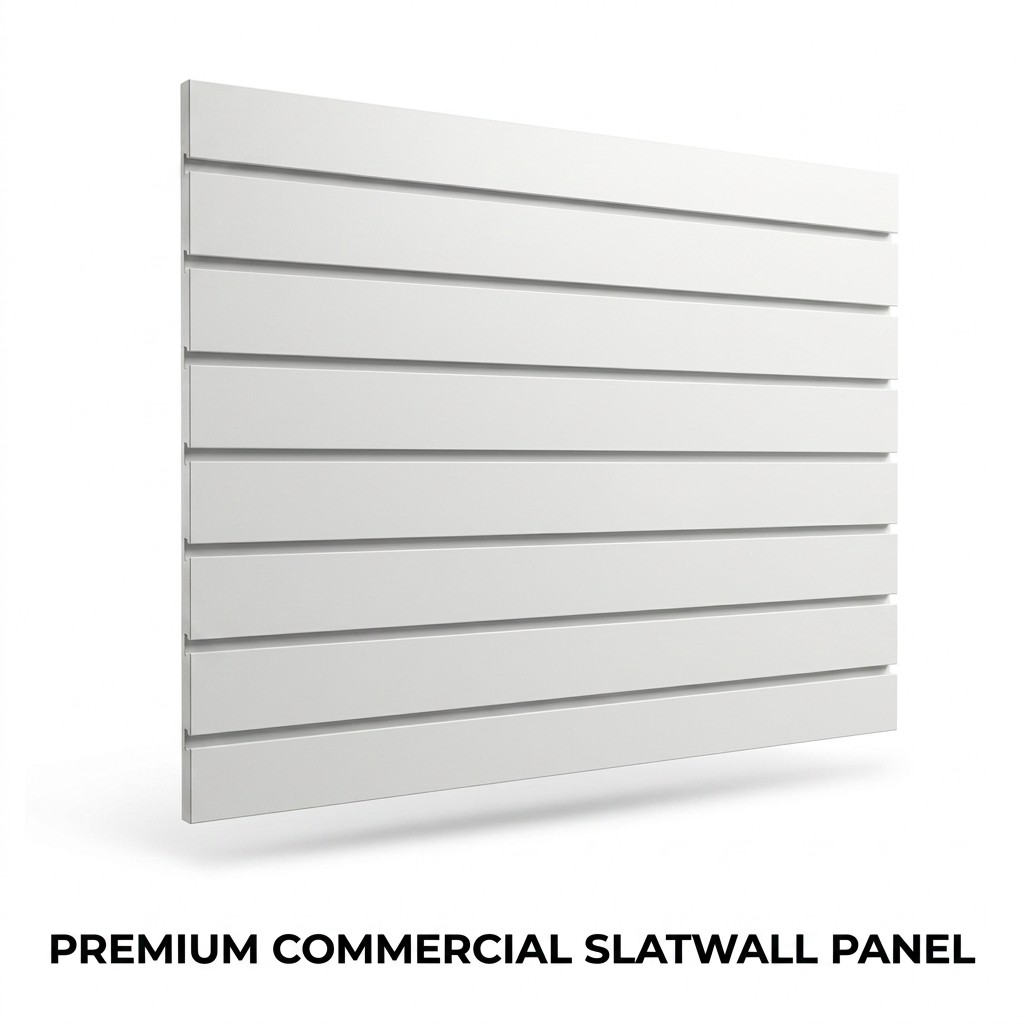
Custom MDF slatwall panels are made around a fixture, wall or display system. A reference photo can show the look, but a factory still needs controlled dimensions, groove and insert details, finish requirements and the intended use before it can review the job.
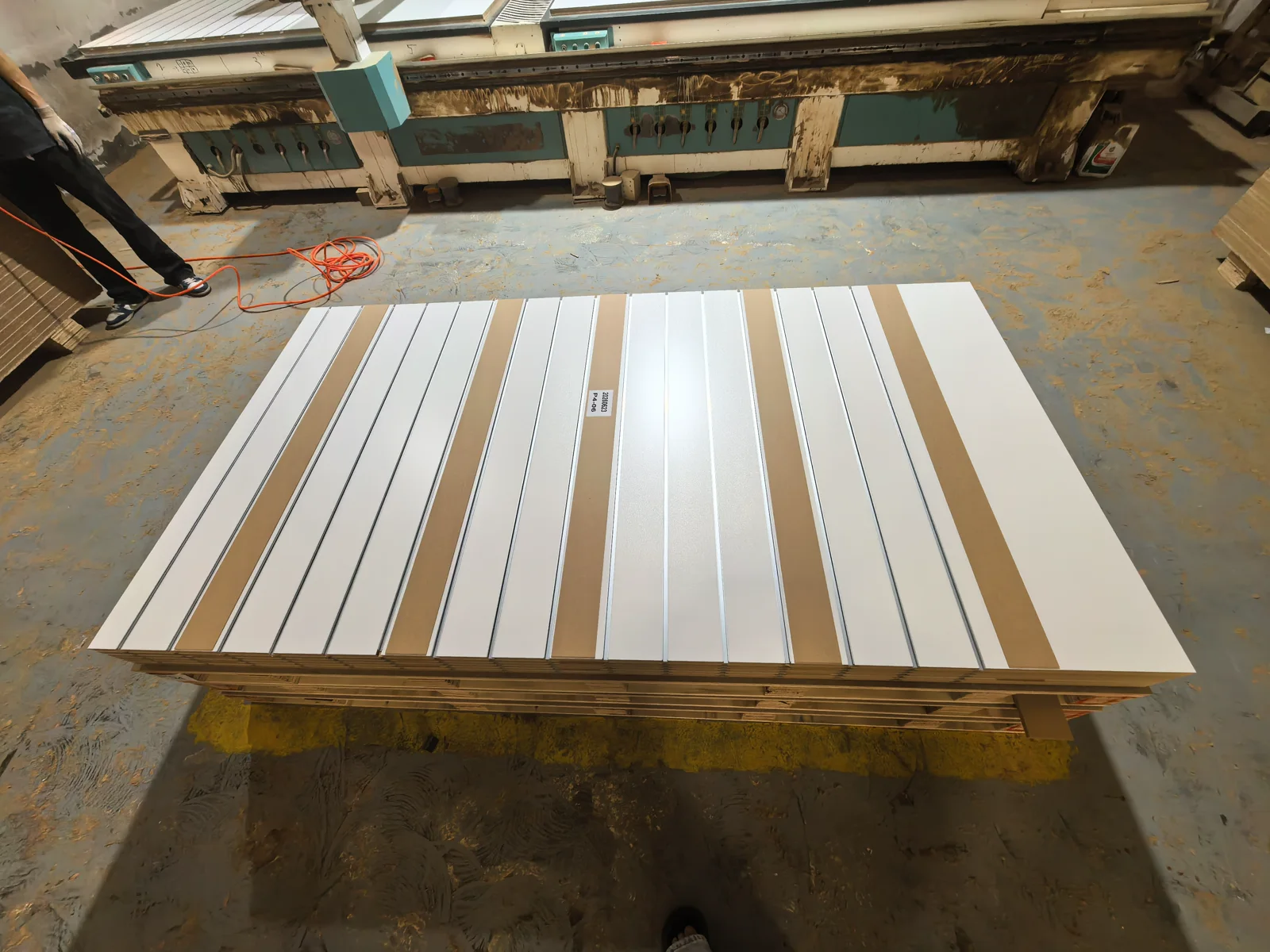
Start with the installed panel format
Provide finished length, width and thickness, total quantity and the installation context. State whether the panels cover a retail wall, fit inside cabinets, form part of a counter or belong to a freestanding fixture. Show the visible face, orientation and any edge that must align with an adjacent panel.
If a wall uses several panel sizes, send an elevation or numbered layout as well as individual part drawings. This reduces the risk of correct parts arriving in the wrong sequence.
Control the groove layout from a datum
The drawing should identify groove direction, pitch, count, width, depth and the first groove position. Add edge distances and mark areas that must remain unmachined. If the design is asymmetrical, identify the top, bottom, left and right rather than relying on a photograph.
A useful drawing shows which dimensions are functional. Tight tolerances on every feature can add cost without improving assembly, while an uncontrolled first groove or panel edge can make neighbouring panels look misaligned.
Review the groove and insert as one interface
If the panel uses an aluminium, PVC or other insert, include the profile drawing, controlled dimensions or an approved sample. Similar-looking profiles are not necessarily interchangeable. The groove must be reviewed against the actual insert geometry and the condition in which the insert will be supplied.
Define surface, colour and edge condition
State whether the panel is required unfinished, painted, laminated or prepared for another finishing operation. Give an agreed colour or physical sample when appearance matters. List exposed edges separately and describe whether each edge remains raw, sealed, banded or prepared as a joint.
Also identify which surfaces must be protected during handling. A finish approval method should be agreed before production; a screen image alone is not a reliable colour standard.
Provide the use case without treating it as engineering approval
Share the wall or fixture size, intended hooks or accessories, approximate loading and support method. This helps the manufacturer flag obvious conflicts in groove spacing, panel geometry or handling. It does not replace the buyer’s structural design, installation engineering or compliance review.
Separate the quotation scope
Write down what the supplier is expected to deliver: machined panels only, panels with inserts, finished panels, labelled sets or another scope. Identify buyer-supplied parts and state whether samples, first articles or production fixtures are required. Quantity, destination and target packing method also belong in the RFQ because they affect handling and shipment planning.
Agree inspection points before production
Typical items to discuss include finished panel size, thickness, groove position and spacing, insert fit, hole locations, visible surface condition and edge treatment. Mark the dimensions that need recorded checks. If an accessory must fit the groove, provide the controlled interface or an approved physical sample.
YENC’s current product page includes real workshop records of groove and insert details, panel handling and a batch dimension check. Review the slatwall production videos when preparing the inspection list.
Confirm packing around the finished panel
Finished faces and machined edges can be damaged by abrasion, impact, moisture or unsuitable stacking. State any face separator, corner protection, wrapping, pallet, labelling or container requirements. Final packing should be reviewed against panel dimensions, finish, destination and shipment method.
RFQ checklist
- Panel schedule, finished dimensions and quantities
- Installation elevation or fixture layout
- Groove direction, pitch, count, width, depth and datum
- Insert profile drawing or approved sample
- Surface finish, colour approval and exposed-edge treatment
- Openings, holes, joint details and orientation marks
- Intended accessories, loading context and support method
- Critical tolerances and recorded inspection points
- Required supply condition, labelling and packing
- Prototype quantity, production quantity and destination
What this information does not prove
A product photograph or factory video does not establish a load rating, fire classification, emissions result or project approval. If the destination project requires a specific standard or report, name it in the enquiry and confirm the acceptable evidence before quotation.
See the custom MDF slatwall panel manufacturing page for current production and shipment references. Send the drawing package and requirement list through the YENC contact page for a manufacturability review.