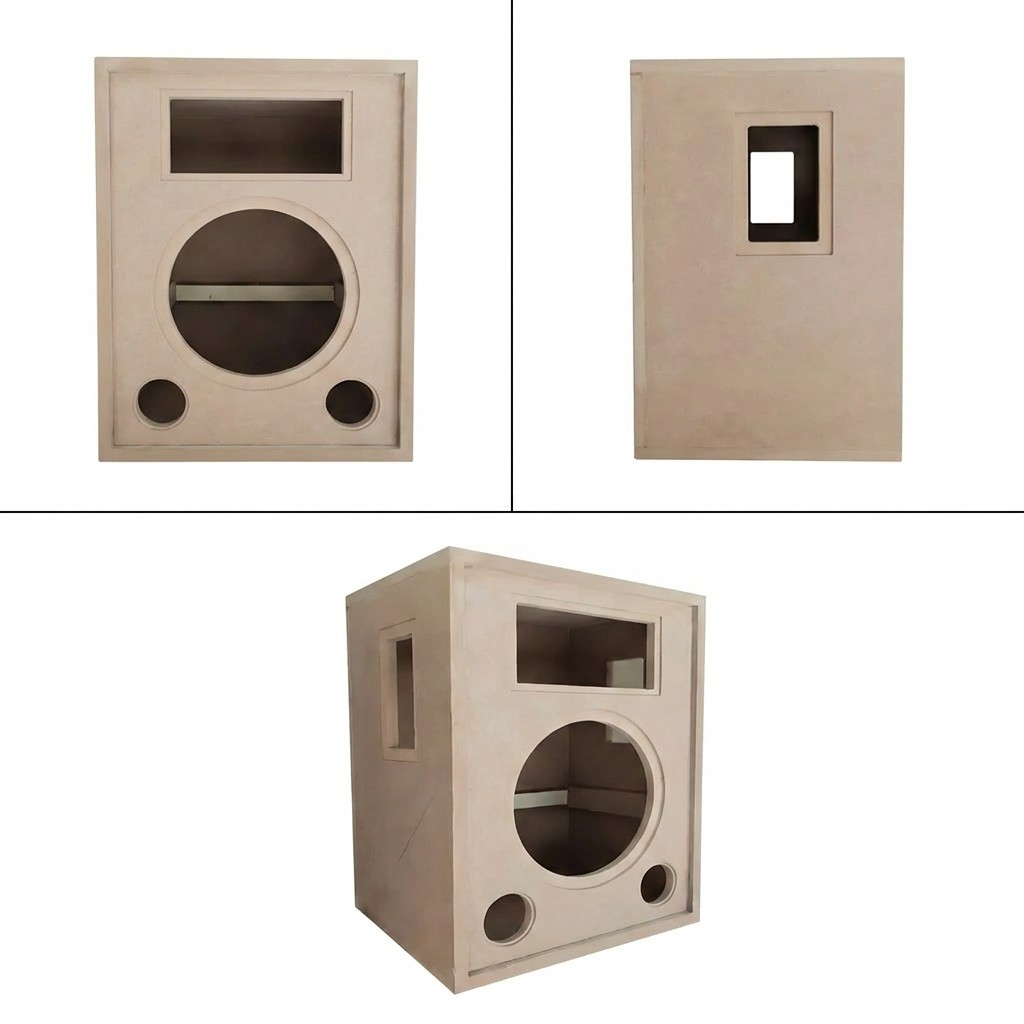
CNC-machined board components are made from the dimensions and requirements in the approved drawing. A clear file shortens the review because the supplier can identify the material, machining steps and inspection points without reconstructing the design from photographs.
Name the board material and thickness
State whether the part uses MDF, HDF, plywood or particle board. Include the nominal thickness and any material grade or supplied reference that matters to the project. Similar-looking boards can machine differently, so the material should not be left as an assumption.
Dimension the complete geometry
Profiles, openings, recesses, drilled holes, slots and assembly features should all be dimensioned. Show datum points where they are needed. If several parts form a kit, use part numbers and provide an assembly reference so each component can be checked in context.
Mark critical tolerances
Do not apply the tightest tolerance to every dimension by default. Mark the features that control fit, alignment or assembly, and provide the inspection requirement for those dimensions. The factory can then review whether the requested tolerance is practical for the selected board and machining process.
Describe the required supply condition
Specify whether parts are needed as loose machined components, grouped kits or reviewed assembly options. State whether edges and surfaces should remain machined, receive a finish or be prepared for downstream work by another supplier.
Include commercial information
The RFQ should include quantity, required file format and any reference sample. Quantity matters because it affects process planning and packing. A sample can help explain a feature, but the confirmed drawing should remain the production reference.
Drawing review checklist
- Part number and revision
- Material and thickness
- Overall dimensions and machined features
- Critical tolerances and inspection points
- Quantity and supply format
- Edge, surface and downstream finish requirements
The CNC-machined board components page lists the current material and process scope. Send the drawing through the YENC contact page for feasibility review.